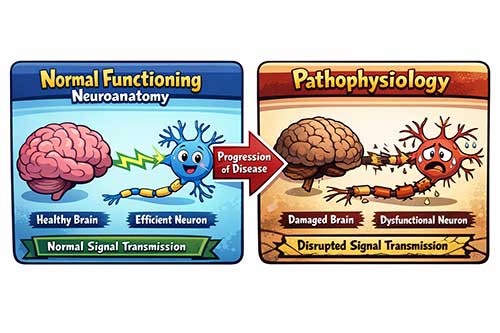
As physical and occupational therapists, our ultimate goal is to restore function and improve the quality of life for our patients. While evidence-based protocols provide a crucial framework for treatment, true clinical excellence requires a more profound understanding—specifically, a solid grasp of normal functioning neuroanatomy to pathophysiology . This knowledge serves as the foundation for developing effective, individualized rehabilitation strategies. North American Seminars Functional Neuroanatomy series will assist the clinician with an understanding of normal functioning neuroanatomy to Pathophysiology.
Functional Neuroanatomy
The North American Seminars Functional Neuroanatomy Series provides a comprehensive and foundational understanding of the nervous system, essential for clinicians across various disciplines. This functional-clinical approach allows practitioners to analyze and interpret how neurological dysfunction can present across a broad spectrum of issues:
The human nervous system is an incredibly complex, interconnected network responsible for everything we do. When this system malfunctions, the effects are diverse and often profound, manifesting as the symptoms we treat every day:
Disease Presentation: Conditions like Multiple Sclerosis involve demyelination within the CNS, while peripheral neuropathies affect the integrity of peripheral nerves. Knowing the underlying mechanism of the disorder—the pathophysiology—allows the PT to anticipate the progression, understand the fluctuating nature of symptoms, and apply techniques that are neurophysiologically appropriate, such as energy conservation strategies or targeted sensory stimulation.
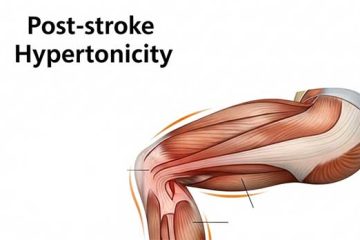
Motor Function Abnormalities: Dysfunction in the motor cortex, basal ganglia, or corticospinal tract can lead to issues ranging from the spasticity seen in stroke or cerebral palsy to the rigidity and tremor characteristic of Parkinson’s disease. Knowing the role of these areas—for instance, the basal ganglia’s role in motor planning and inhibition—allows the therapist to target specific impairments rather than just treating the resulting movement pattern.
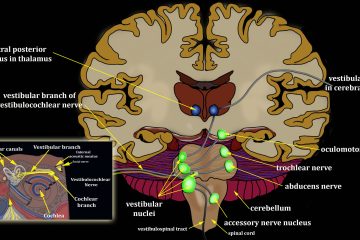
Sensory and Balance Abnormalities: A compromised dorsal column-medial lemniscal pathway impairs proprioception and discriminative touch, directly impacting a patient’s stability. Damage to the cerebellum or its afferent/efferent connections disrupts the crucial feedback loop for motor coordination and balance. By localizing the probable lesion based on the patient’s sensory and balance deficits, you move beyond generic balance training to specific sensory re-weighting or compensatory strategies.
Normal Functioning Neuroanatomy to Pathophysiology – The Functional Neuroanatomy Series
Subscribe to the Online Library and gain access to all of the courses within the series, plus a full library of functional rehabilitation courses for a variety of diagnoses.
Functional Neuroanatomy PT Online Course Part 1: The Nervous System
Functional Neuroanatomy PT Online Course Part 2: CNS Cellular Neurobiology and Disorders
Functional Neuroanatomy PT Online Course Part 3: The Cerebellum and Spinal Cord
Functional Neuroanatomy PT Online Course Part 4: Nerve Pathways and Dysfunction
Functional Neuroanatomy PT Online Course Part 5: Neurological Exam

References
Welch MC, Yu J, Larkin MB, Graves EK, Mears D. A Multimedia Educational Module for Teaching Early Medical Neuroanatomy. MedEdPORTAL. 2020 Mar 6;16:10885. doi: 10.15766/mep_2374-8265.10885. PMID: 32181329; PMCID: PMC7067615.
Al-Kubaisi FE, Dargham SR, Manyama MF. Enhancing Neuroanatomy Education for Medical Students Through the Development of Online Modules. Adv Med Educ Pract. 2025;16:1601-1608
https://doi.org/10.2147/AMEP.S541772
Verhoeven BH, Verwijnen GM, Scherpbier AJJA, Van Der Vleuten CPM. Growth of medical knowledge. Med Educ. 2002;36(8):711–717. doi:10.1046/j.1365-2923.2002.01268.x